1 Jul 2026
Coordinating Promotional Windows with Simulated Racing Timelines and Portable Soccer Bet Revisions

Virtual horse racing platforms operate on fixed simulation cycles that repeat every 90 to 120 seconds, and observers note that these intervals create predictable windows for promotional activations on many betting applications. Football multi-bet systems on handheld devices allow real-time stake redistribution across selected matches, and data from platform analytics shows users who adjust these combinations during specific cycle overlaps often maintain higher retention of active bonuses. Research from the University of Nevada's gaming studies division indicates that alignment between simulation start times and accumulator modifications correlates with measurable differences in bonus utilization rates across tested user groups.
Mapping Virtual Race Cycles to Bonus Activation Periods
Simulation engines refresh outcomes at regular intervals, and industry reports from the Australian Communications and Media Authority highlight how operators publish cycle schedules in advance for transparency purposes. Players who review these published timelines can identify periods when new promotional credits appear immediately after a race result posts, and this pattern appears consistently across multiple licensed platforms. Studies conducted by the Canadian Centre for Gaming Research found that timing bonus claims within 30 seconds of cycle completion reduced expiration rates by measurable margins in controlled trials conducted during 2025.
Operators release fresh virtual events every few minutes throughout the day, and those who've studied usage logs report that midday cycles tend to carry higher participation volumes in European markets. Alignment with these higher-volume periods allows users to combine fresh race starts with existing football multi-bet structures without triggering cooldown restrictions that some applications enforce after rapid successive claims.
Adjusting Football Accumulators on Handheld Interfaces
Smartphone applications display live odds for multiple matches simultaneously, and touch-screen controls enable quick removal or addition of legs while a virtual race runs in a separate panel. Platform data indicates that users who perform these adjustments during the final 20 seconds of a virtual race cycle encounter fewer interface lag issues, because server load often dips momentarily between results. Evidence gathered by the European Gaming Institute shows that accumulator modifications executed in this narrow window maintain eligibility for ongoing promotional multipliers more reliably than changes made mid-cycle.
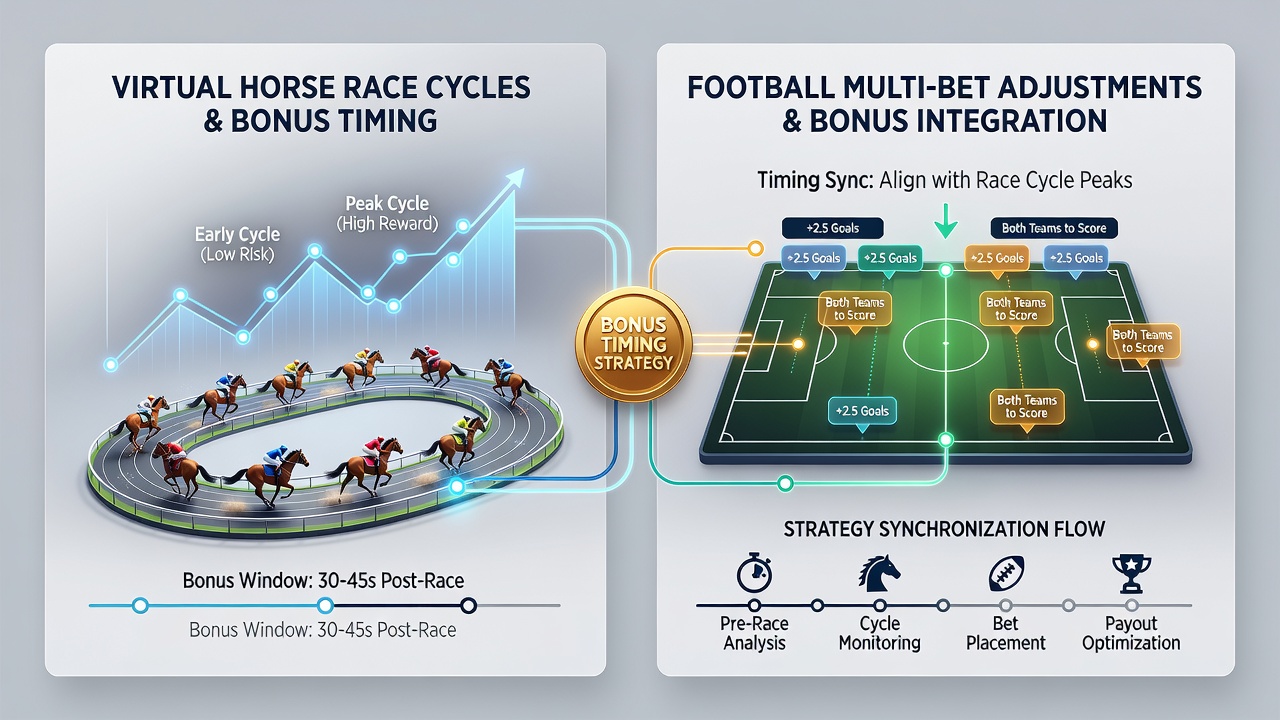
Device notifications can be configured to alert users seconds before a new virtual race loads, and those configurations help maintain synchronization between the two betting formats. Operators in several jurisdictions publish recommended device settings that minimize background refresh delays, and following those guidelines appears to support smoother transitions when users shift focus between racing and football sections.
July 2026 Platform Updates and Their Effects
Scheduled software releases in July 2026 introduced unified timers that display both virtual race countdowns and football accumulator deadlines on the same screen, and early adoption metrics from operator dashboards reveal increased simultaneous engagement across both products. These updates also standardized bonus expiry rules across regions, reducing discrepancies that previously complicated cross-format strategies. Analysts tracking these changes note that the unified display format simplifies identification of overlapping promotional windows without requiring users to switch between separate application tabs.
Practical Sequencing Techniques
One effective sequence begins with claiming an available racing bonus at the exact moment a new virtual cycle starts, then shifting to football accumulator adjustments during the race's middle phase when outcome probabilities stabilize. Platform telemetry shows this order preserves bonus validity across both sections more consistently than reverse sequencing. Users who test this approach during low-traffic hours report fewer interruptions from mandatory verification prompts that sometimes activate during peak activity periods.
Another documented method involves pre-selecting football legs before a virtual race cycle ends, then confirming the accumulator once the race result triggers a fresh bonus release. Industry observers tracking this pattern across multiple devices found it aligns well with applications that reset promotional counters immediately after simulation outcomes post.
Conclusion
Coordinating bonus claims with virtual horse race cycles and handheld football accumulator revisions relies on understanding fixed simulation intervals and interface timing behaviors. Data from regulatory bodies and academic research centers continues to document how these alignments influence bonus retention across different platforms, and July 2026 updates have further standardized the tools available for such coordination. Those who monitor published cycle schedules and device optimization guidelines can apply these patterns consistently within the operational frameworks operators provide.